
Category
Roof Cleaning Equipment
- Roof scrapers and moss removal tools: clear moss from the ground on a telescopic pole, with no ladder and no walking on tiles
- Blade profiles to match Marley, Redland and flat tiles, plus softwash and pressure options for render and hard surfaces


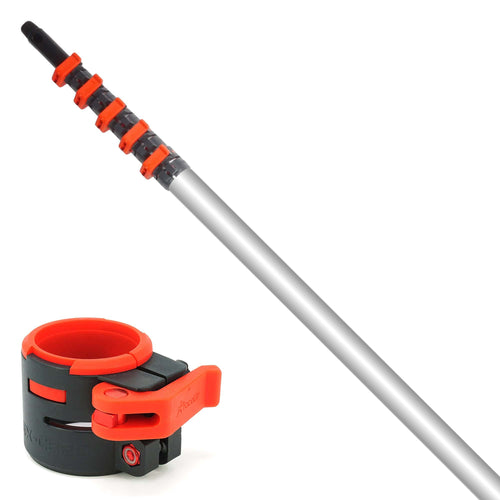
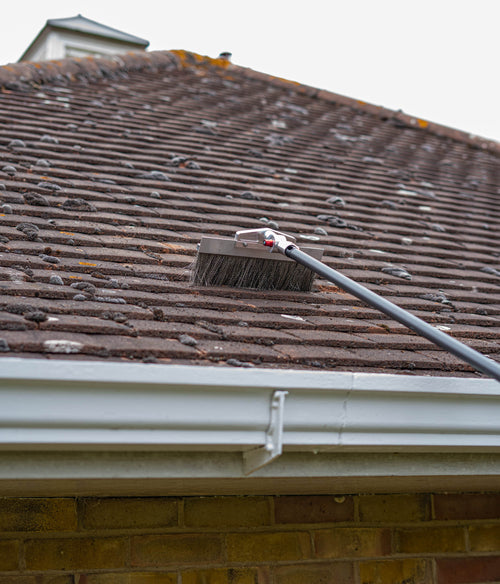
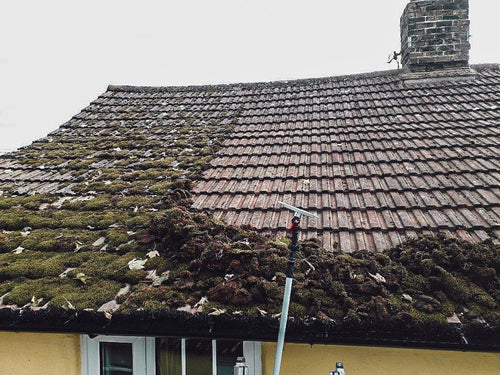






Roof moss holds water against the tiles and stops it draining to the gutter, which is how a moss job turns into a damp job. Clearing it used to mean a ladder and a walk across someone else's roof. The kit in this collection does it from the ground instead, on a telescopic pole.
Three methods sit in here, and most cleaners use more than one. Scrapers and brushes take moss off dry. Softwash puts chemical on at low pressure through a pole mounted nozzle. Power poles carry a pressure washer lance up to 30ft for render, flat roofs and hard standing. The tile profile, the pitch and what the customer is paying for decide which one comes off the van.
Choosing a scraper head
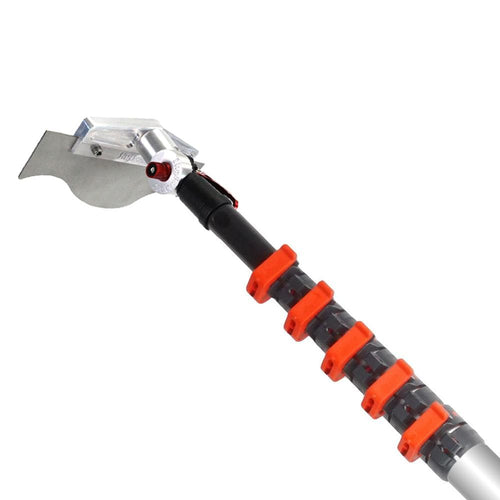
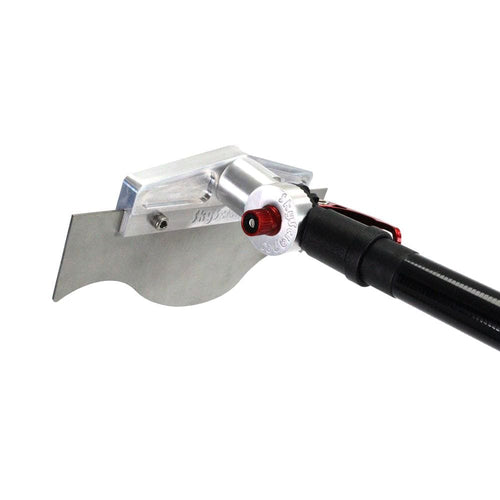
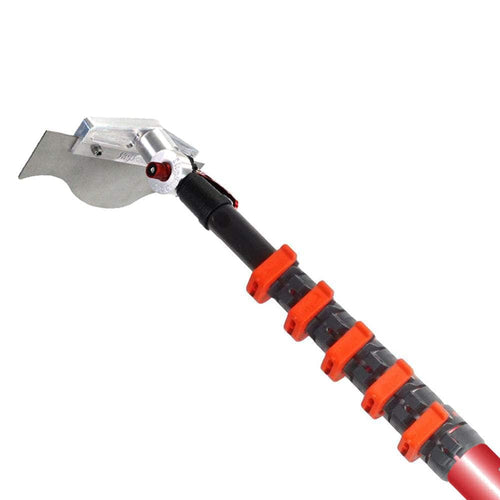
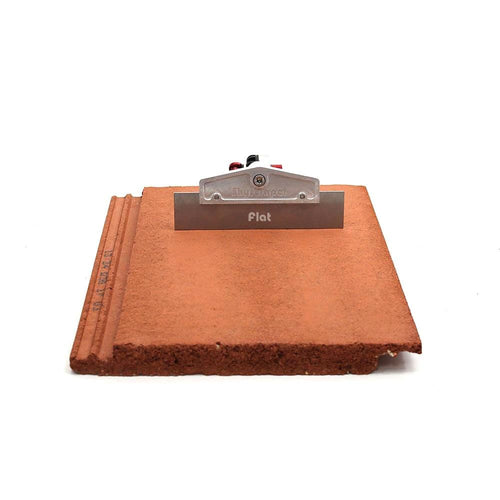
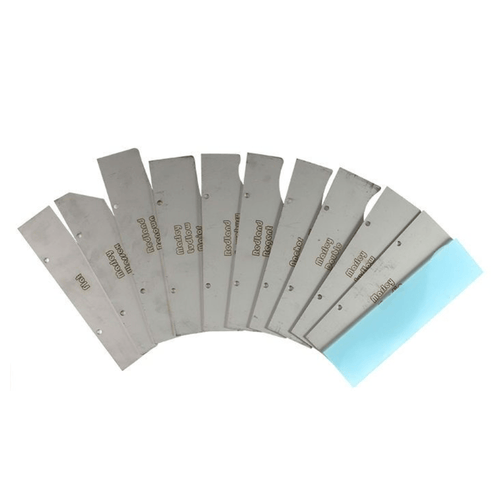
- Pure Freedom RoofMaster: ten blade profiles covering Anchor Bold Roll, six Marley tiles, three Redland tiles and flat. The head angle adjusts to the pitch, and blades change by clamp rather than tools. Buy it as a kit, as a head on its own if you already have a pole, or as a bundle with the pole included.
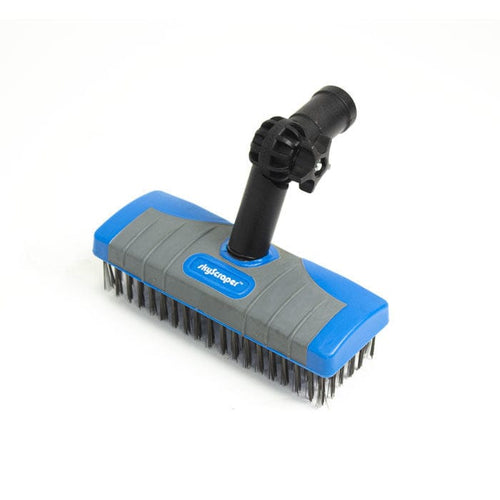
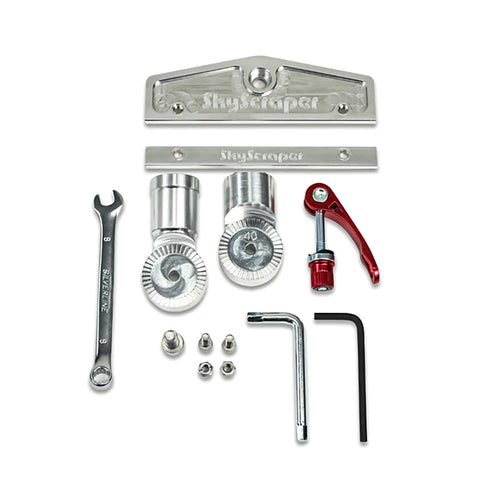
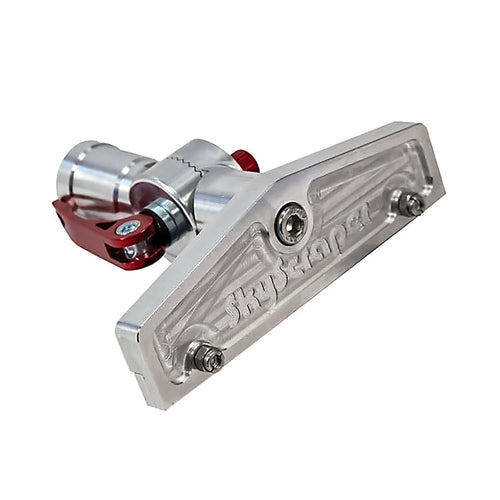
- skyVac skyScraper: eleven blades, the same tile list plus flat nylon, and a wire brush in the box. The head with a blade fitted weighs 400 grams, which you notice by the end of a day at 30ft.
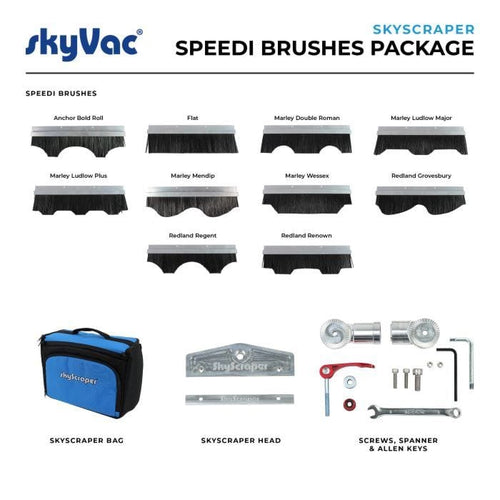
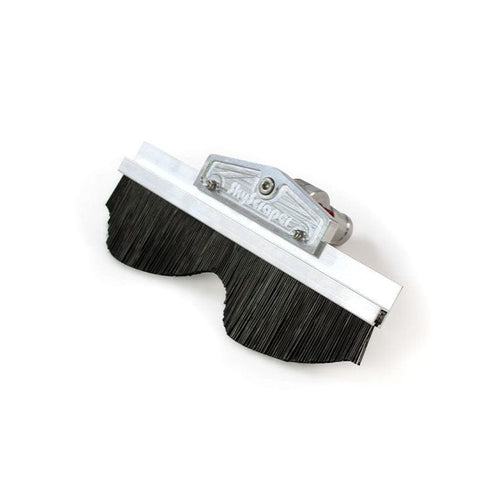
- Brushes rather than blades: the skyScraper Speedi set swaps to ten polypropylene brush profiles. Brushes scrub instead of cutting, so they suit tiles where a blade edge is too aggressive, and older tiles that have started to soften.
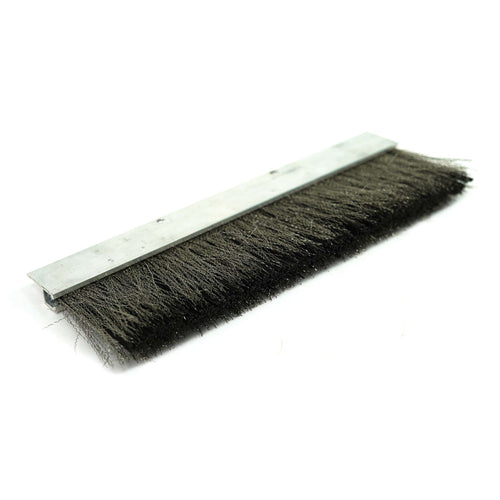
- skySweeper: a 70mm bristle sweeper in steel, or a steel and polypropylene mix, for flat tiles and tidying the ridge. It mounts on the skyScraper head, so it is an add on rather than a system of its own.
Fitting it to a pole you already own. Both heads take a standard male euro thread, the same fitting as a water fed brush, so most poles already on the van will take one. The skyScraper is confirmed on the FaceLift Phantom, Renegade and Phoenix. The RoofMaster ships with adapters for common water fed poles. If you need a pole too, the Renegade bundle comes in 20ft, 25ft and 30ft.
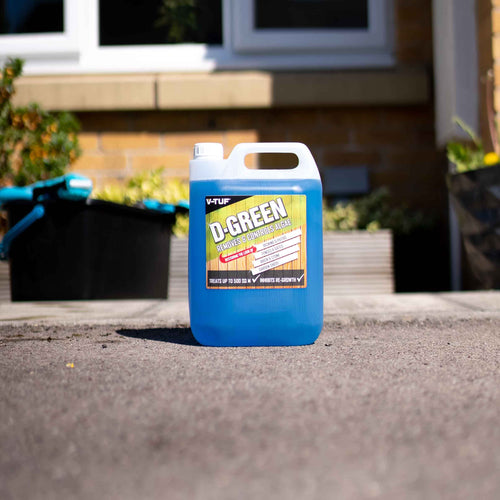
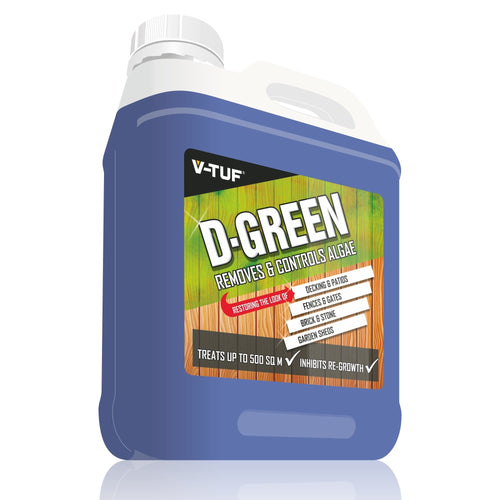
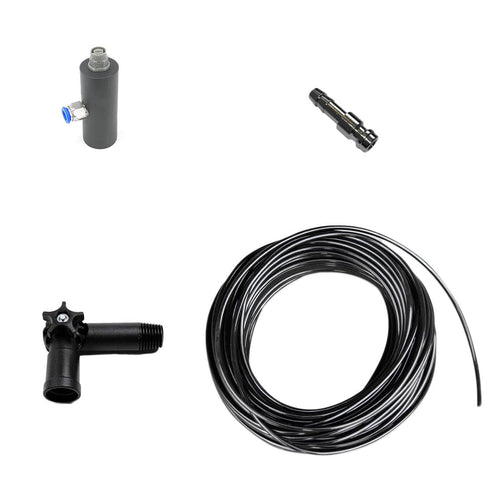
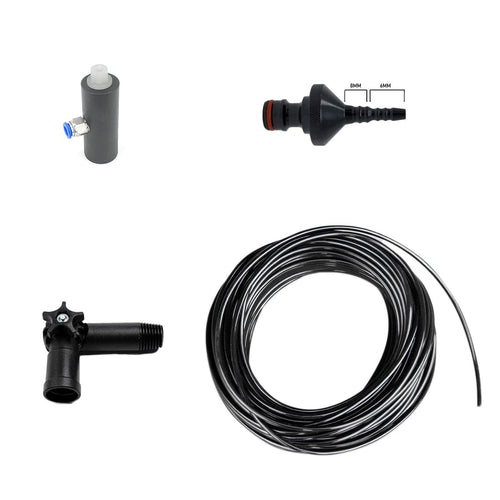
Softwash and pressure. The Chemical Applicator upgrade kit turns a FaceLift pole into a chemical applicator: nozzle, 30m of pole hose, angle neck, and a choice of Hozelock or microbore coupling. It fits any pole with a male euro thread, and V-TUF D-Green is the algaecide we stock to go through it. For pressure work the FaceLift Phantom Power Pole extends 6 to 30ft and takes up to 280 bar, and the Twin Turbo Jet attachment is rated to 250 bar on machines over 21 litres a minute. Power poles need a pressure washer to run, so check what you have before you order.
Blades wear, and that is the running cost. RoofMaster blades sell individually or as a set of all ten, and skyScraper blades are stocked as replacements. Buy the profile you meet most often on your round and keep a spare. A rounded blade skates over moss instead of lifting it, which is usually what someone is describing when they say a scraper has stopped working.
If you are not sure which system suits the roofs on your round, the technical team have used this kit and will talk it through on the phone, by email or on WhatsApp. Free courier delivery on orders over £75 ex VAT, and free 30 day returns if you pick wrong.
Let customers speak for us

Simply the mop out there

Whould of linked the choice of fan jets and not have to buy the full set as you whould not use them all

brill service always great products

I would highly recommend this company ordered and came very quickly

Best soap I’ve used 👌🏻

I hook it to my belt along with a brush and use it for when I'm very low on clothes and/or water.
I am thinking of getting another

Excellent clamps. Hard wearing and well designed. I broke number 2 clamp hitting the edge of the tile cleaning over an extension. Window Cleaning Warehouse sent me a replacement very quickly. Many thanks.
Now it’s back to using my Phantom 22 carbon pole with their excellent clamps.

Excellent pole very sturdy and extremely light weight.

Excellent product does exactly what it says, gives the windows a really good clean.
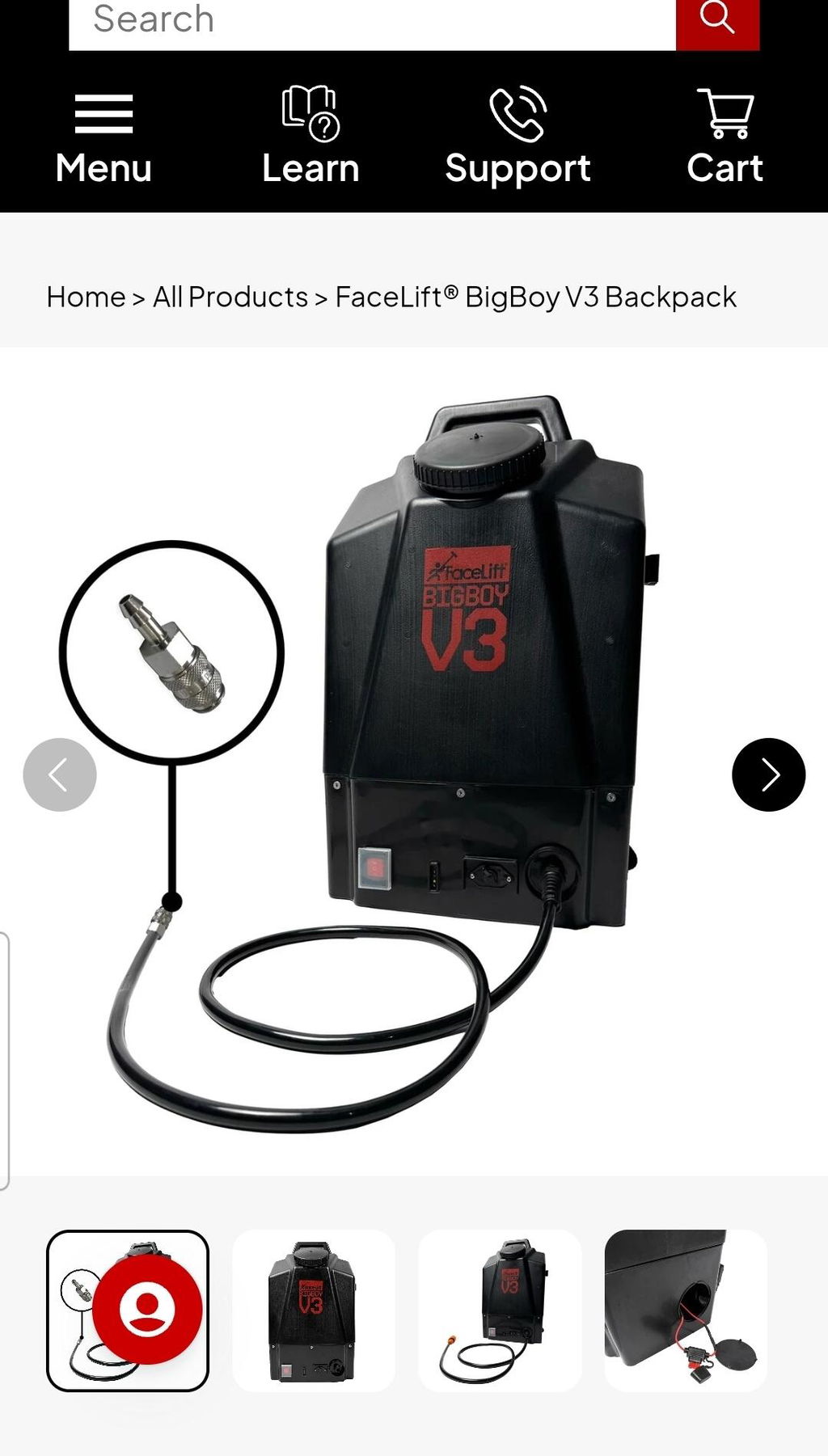
Ive had Gardiner back packs in the past, but never thought they were up to scratch, so someone says the v3 big boy has been improved, so I thought id try it. I like it, so far so good.
Very good to deal with great service

Item as described, delivery and communications 1st.

Tried them all , the unger monsoon wins every time the only one I use
Unger Rubout solution, quick turnaround, fair price. Needs a couple of applications and a good cleanup after use.

Always use this resin - the best imo
What customers think about the store
This store offers a wide range of quality window cleaning and exterior cleaning products with fast, reliable delivery. Customers praise the excellent customer service, knowledgeable staff, and competitive pricing. Many appreciate the helpful advice, quick resp...
AI-generated from customer reviews.
SIGN UP TO OUR NEWSLETTER
Sign up to our newsletter for exclusive offers, advice and updates.
